
Madrid (Spain), 1 Aug. (LaPresse) – Spanish government sources emphasise that Madrid applies strict controls on those leaving Ceuta and that, consequently, entering the autonomous city does not mean having free access to the rest of the Schengen area. “Ceuta and Melilla are part of the Schengen area, but are subject to a specific regime, unique in Europe: Schengen checks are also carried out on departure, by sea or by air, which are the only two existing routes of transit. Consequently, no one can travel from Ceuta or Melilla to mainland Spain without presenting identification to the National Police at the port and airport. Furthermore, shipping companies and airlines are required to check documents”, sources at Moncloa point out. Spain therefore applies a dual control system: one at the border with Morocco and another – the Schengen control – on departure for mainland Spain, “so that unauthorised entry into the cities never results in entry into the rest of the Schengen area”, officials in Madrid point out, recalling that this principle has been enshrined since Spain’s accession to Schengen in 1991, in the Declaration on Ceuta and Melilla annexed to the Accession Agreement, and is preserved in Article 41 of the Schengen Borders Code. “Irregular entry into Ceuta does not confer the right to remain in Spain, to travel on the Iberian Peninsula or to move freely within Europe,” government sources emphasise, going on to assure that “the integrity of the Schengen area is fully guaranteed”, as also defended yesterday by the Spanish Foreign Minister, José Manuel Albares.
Migrants: Sources in Madrid say those entering Ceuta do not have free access to the Schengen area
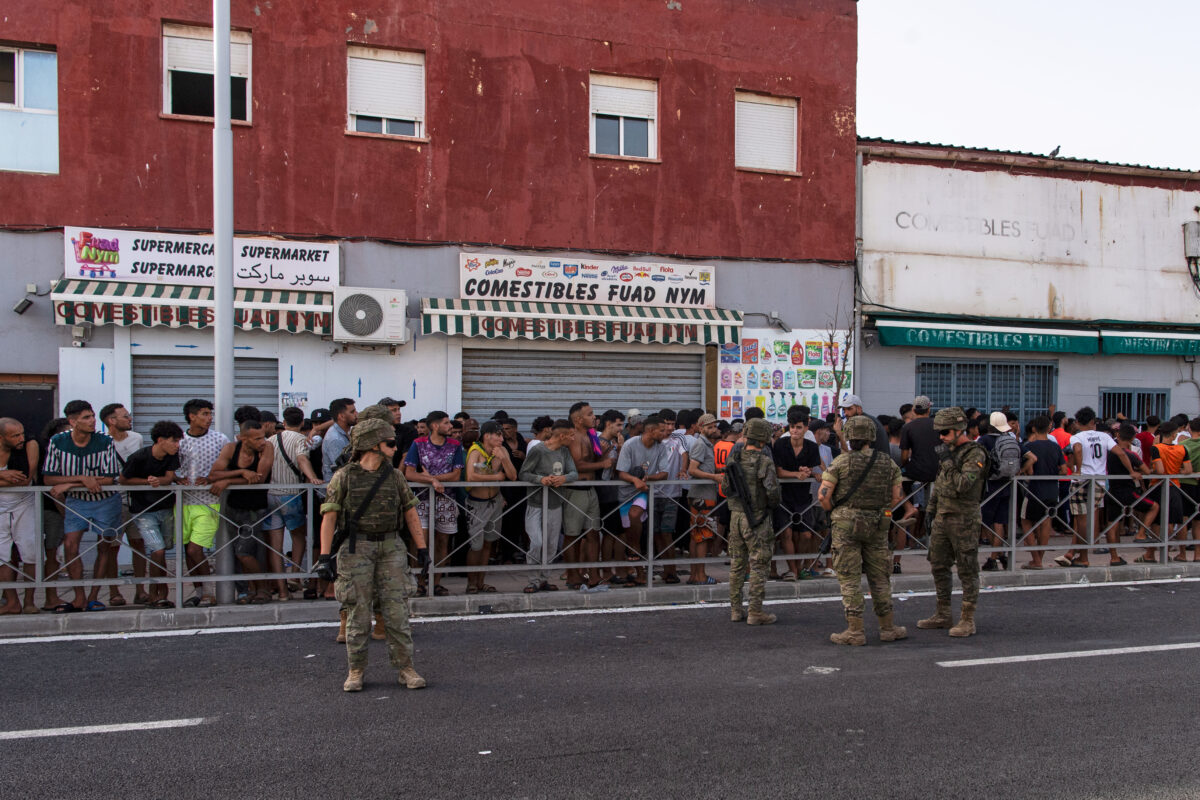

Madrid (Spain), 1 Aug. (LaPresse) – Spanish government sources emphasise that Madrid applies strict controls on those leaving Ceuta and that, consequently, entering the autonomous city does not mean having free access to the rest of the Schengen area. “Ceuta and Melilla are part of the Schengen area, but are subject to a specific regime, unique in Europe: Schengen checks are also carried out on departure, by sea or by air, which are the only two existing routes of transit. Consequently, no one can travel from Ceuta or Melilla to mainland Spain without presenting identification to the National Police at the port and airport. Furthermore, shipping companies and airlines are required to check documents”, sources at Moncloa point out. Spain therefore applies a dual control system: one at the border with Morocco and another – the Schengen control – on departure for mainland Spain, “so that unauthorised entry into the cities never results in entry into the rest of the Schengen area”, officials in Madrid point out, recalling that this principle has been enshrined since Spain’s accession to Schengen in 1991, in the Declaration on Ceuta and Melilla annexed to the Accession Agreement, and is preserved in Article 41 of the Schengen Borders Code. “Irregular entry into Ceuta does not confer the right to remain in Spain, to travel on the Iberian Peninsula or to move freely within Europe,” government sources emphasise, going on to assure that “the integrity of the Schengen area is fully guaranteed”, as also defended yesterday by the Spanish Foreign Minister, José Manuel Albares.