
Brussels, 8 Oct. (LaPresse) – “In short, we cannot continually introduce new forms of budgetary flexibility.” European Commissioner for Economic Affairs Valdis Dombrovskis said this at a press conference at the end of the Eurogroup regarding the request for further flexibility put forward by Italy and Greece. “In recent weeks,” he specifies, “we have seen a rise in yields on global government bond markets and a widening of spreads within the euro area; therefore, budgetary prudence is necessary. Member States should adhere to the objectives set in their medium-term structural budget plans and use the flexibility provided for in the national safeguard clauses with caution. It is also worth remembering that our new budgetary framework already contains several elements of flexibility to address the current situation in a balanced way.” The Commissioner recalls that ‘a key feature of our budgetary framework is, in fact, the countercyclical nature. This means, for example, that the drops in revenue due to the economic slowdown must not be offset. Similarly, an increase in interest expenditure must not be offset under the ongoing medium-term plan; something that is clearly relevant at the current juncture. Finally, upward inflationary pressures are already taken into account as part of the overall assessment of the factors relevant to verifying Member States’ compliance with budgetary rules.” Dombrovskis said the Commission “also positively assessed the requests of Greece and Italy to make use of this greater flexibility. Unfortunately, in the short run, price pressures may persist as winter approaches. It is important that any short-term measures aimed at alleviating their impact are targeted at the most vulnerable groups. Measures of general scope would not only entail excessive costs for public finances, but would also increase energy demand and prices, ending up not helping those who really need them.”
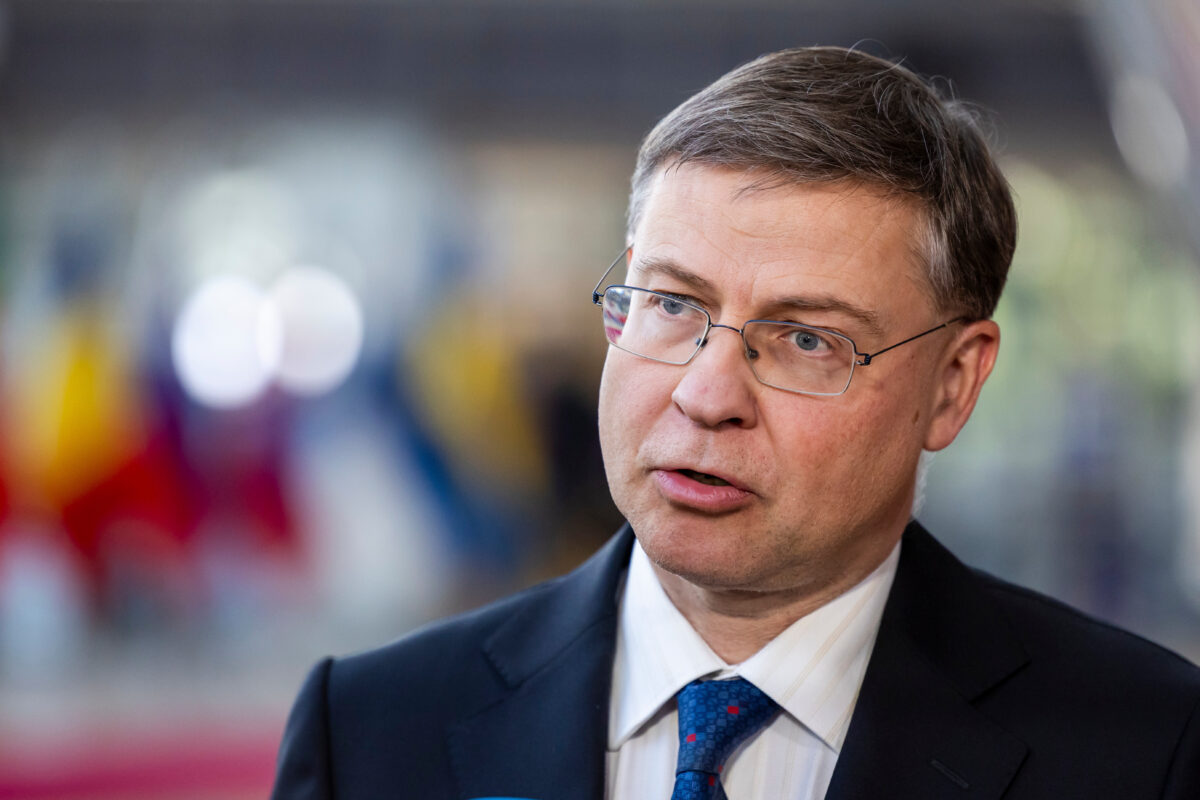
EU, Dombrovskis: “We cannot continuously introduce new flexibilities.”

Brussels, 8 Oct. (LaPresse) – “In short, we cannot continually introduce new forms of budgetary flexibility.” European Commissioner for Economic Affairs Valdis Dombrovskis said this at a press conference at the end of the Eurogroup regarding the request for further flexibility put forward by Italy and Greece. “In recent weeks,” he specifies, “we have seen a rise in yields on global government bond markets and a widening of spreads within the euro area; therefore, budgetary prudence is necessary. Member States should adhere to the objectives set in their medium-term structural budget plans and use the flexibility provided for in the national safeguard clauses with caution. It is also worth remembering that our new budgetary framework already contains several elements of flexibility to address the current situation in a balanced way.” The Commissioner recalls that ‘a key feature of our budgetary framework is, in fact, the countercyclical nature. This means, for example, that the drops in revenue due to the economic slowdown must not be offset. Similarly, an increase in interest expenditure must not be offset under the ongoing medium-term plan; something that is clearly relevant at the current juncture. Finally, upward inflationary pressures are already taken into account as part of the overall assessment of the factors relevant to verifying Member States’ compliance with budgetary rules.” Dombrovskis said the Commission “also positively assessed the requests of Greece and Italy to make use of this greater flexibility. Unfortunately, in the short run, price pressures may persist as winter approaches. It is important that any short-term measures aimed at alleviating their impact are targeted at the most vulnerable groups. Measures of general scope would not only entail excessive costs for public finances, but would also increase energy demand and prices, ending up not helping those who really need them.”