
Rome, Oct. 11 (LaPresse) – “The sanctions announced by the United States could paralyze the Court’s operations and prevent judges from carrying out any public or private activity. For many of us, this is already happening. We are being treated using the same methods reserved for terrorists”. Rosario Aitala is vice-president of the International Criminal Court and, for nearly nine years, has played a leading role in cases involving war crimes and crimes against humanity in Ukraine, Darfur, Afghanistan, Uganda, the Central African Republic and elsewhere. In an interview with Corriere della Sera, he explains that he decided to speak out following the sanctions imposed by the Trump administration “to make it known that the International Criminal Court is saving everyone’s honor. While indifference is spreading, it is demonstrating that power does not erase responsibility, because even in war there is a morality that must be safeguarded. We are rescuing millions of victims of atrocities from oblivion and isolation, and that is why they want to silence us. Our resilience remains intact; the main responsibility now lies with states, which must continue to protect their Court in order to protect their sovereignty”. “The Union has the tools to protect individuals and businesses within European territory, and we are surprised that it has not activated them so far,” he adds. “The Commission has remained inactive and has been unwilling to adopt the legislative and political instruments at its disposal to protect the Court, Europeans and European businesses. For the Union, the Court’s fate is not a judicial matter: it is an existential issue, a test of political autonomy and morality.”
US sanctions, Aitala: “We, ICC judges, are being targeted as if we were terrorists”
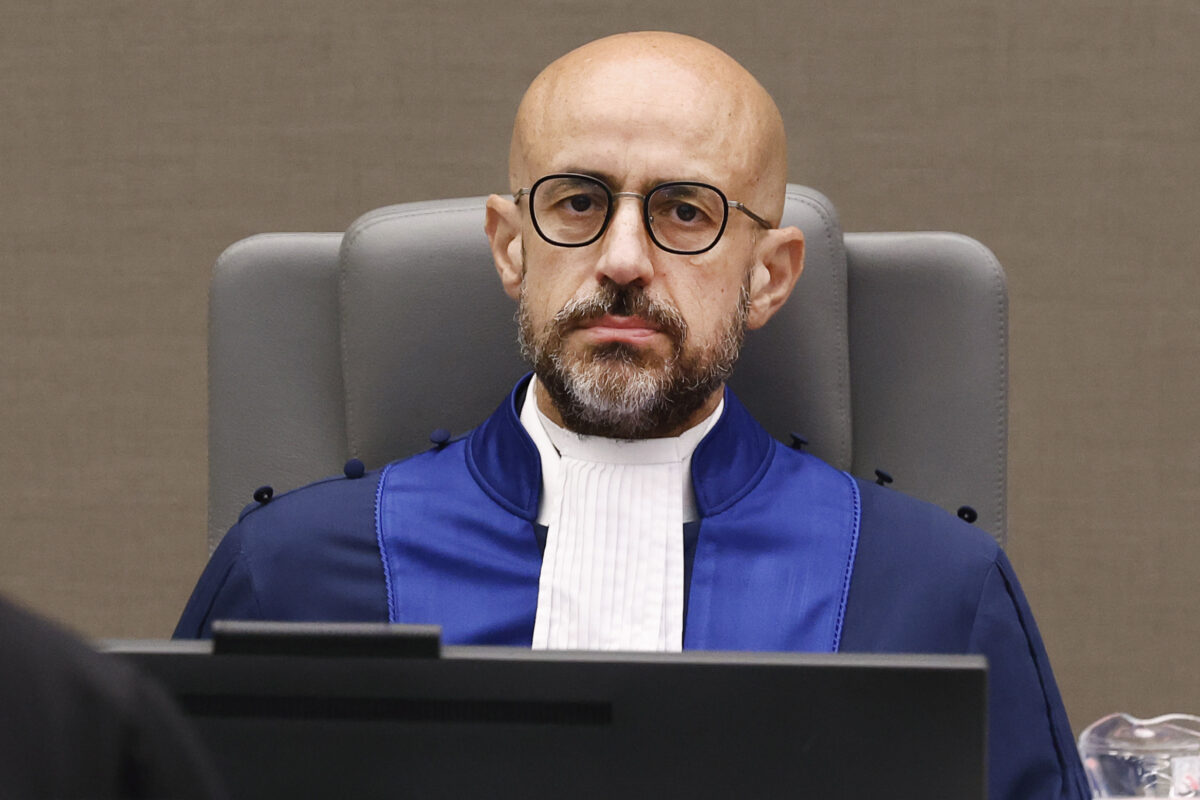

Rome, Oct. 11 (LaPresse) – “The sanctions announced by the United States could paralyze the Court’s operations and prevent judges from carrying out any public or private activity. For many of us, this is already happening. We are being treated using the same methods reserved for terrorists”. Rosario Aitala is vice-president of the International Criminal Court and, for nearly nine years, has played a leading role in cases involving war crimes and crimes against humanity in Ukraine, Darfur, Afghanistan, Uganda, the Central African Republic and elsewhere. In an interview with Corriere della Sera, he explains that he decided to speak out following the sanctions imposed by the Trump administration “to make it known that the International Criminal Court is saving everyone’s honor. While indifference is spreading, it is demonstrating that power does not erase responsibility, because even in war there is a morality that must be safeguarded. We are rescuing millions of victims of atrocities from oblivion and isolation, and that is why they want to silence us. Our resilience remains intact; the main responsibility now lies with states, which must continue to protect their Court in order to protect their sovereignty”. “The Union has the tools to protect individuals and businesses within European territory, and we are surprised that it has not activated them so far,” he adds. “The Commission has remained inactive and has been unwilling to adopt the legislative and political instruments at its disposal to protect the Court, Europeans and European businesses. For the Union, the Court’s fate is not a judicial matter: it is an existential issue, a test of political autonomy and morality.”