Trento, July 11 (LaPresse) – Dengue outbreaks that occur when a case is imported develop almost entirely at a short distance from the primary source of infection, with transmission events occurring at a maximum distance of 400 metres. This is according to a study coordinated by the Italian National Institute of Health and the Bruno Kessler Foundation of Trento, with the contribution of the regions affected by dengue serotype 2 outbreaks in 2024, recently published by Eurosurveillance. The research confirms that early identification and rapid control measures targeting insect vectors are crucial for containing outbreaks. Autochthonous dengue infections are increasing in Europe, particularly in France, Italy and Spain, due to the presence of Aedes albopictus, the so-called tiger mosquito, which is capable of spreading the virus when an imported case occurs. “The study is based on the analysis of outbreaks that occurred in Italy in 2024, which led to a total of 296 cases, the highest number ever recorded in continental Europe,” the Kessler Foundation points out. “By analysing the spatial and temporal characteristics of the sequence of infections and applying mathematical models, researchers sought to reconstruct transmission chains and estimate outbreak characteristics, quantifying the proportion of transmissions that occurred at various distances and estimating the influence of different factors, including temperatures and control measures applied, on secondary virus transmission. During the outbreaks, the study showed that the transmission time between a primary and a secondary case was 18 days, with infection occurring at home in 15.4% of cases. Among the cases for which the transmission chain could be reconstructed, less than 1% occurred more than 400 metres from the source. Once an outbreak was detected, transmissibility dropped sharply, with the number of secondary cases per infection falling from 1.4 to 0.4. Finally, vector control measures were able to reduce transmission by 41.3%, while transmission increased by 19.8% for every one-degree rise in temperature.” The researchers concluded that “autochthonous dengue outbreaks in Italy in 2024 were mainly caused by short-distance transmission. Our findings confirm that early diagnosis of cases and rapid vector control are essential to reduce transmission.”
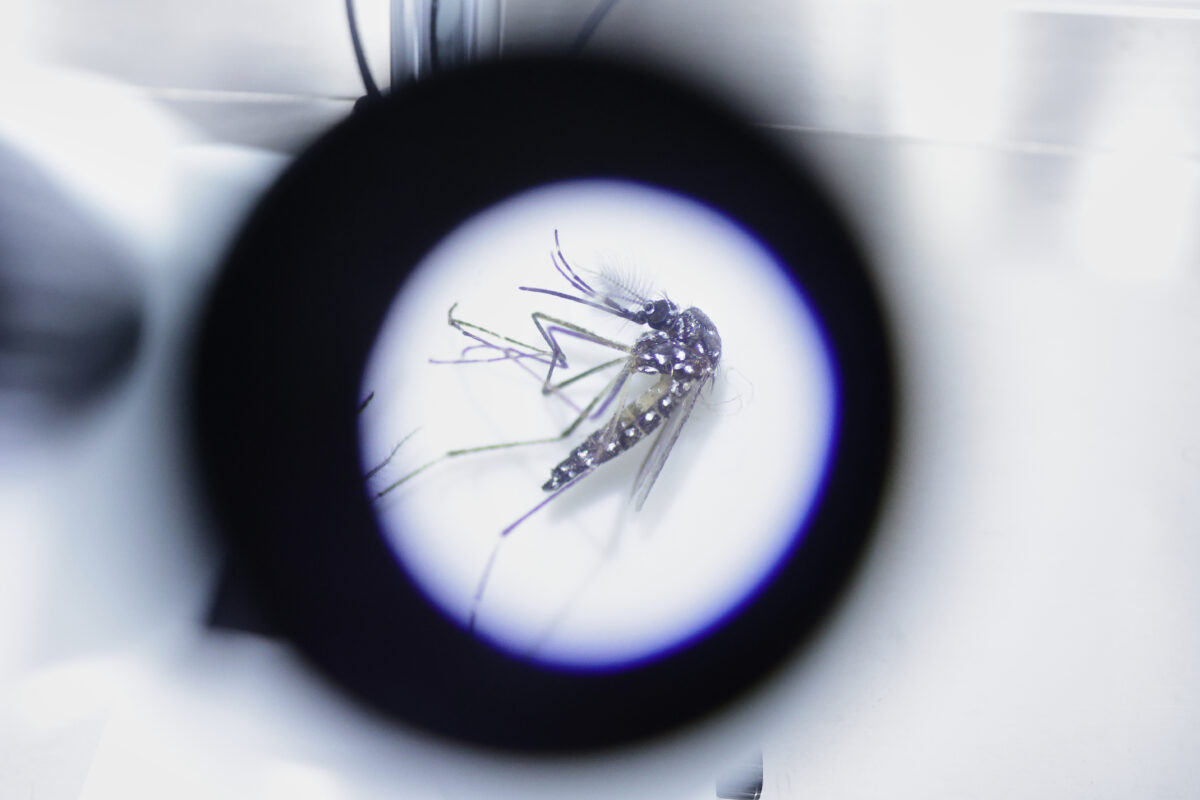
Trento, July 11 (LaPresse) – Dengue outbreaks that occur when a case is imported develop almost entirely at a short distance from the primary source of infection, with transmission events occurring at a maximum distance of 400 metres. This is according to a study coordinated by the Italian National Institute of Health and the Bruno Kessler Foundation of Trento, with the contribution of the regions affected by dengue serotype 2 outbreaks in 2024, recently published by Eurosurveillance. The research confirms that early identification and rapid control measures targeting insect vectors are crucial for containing outbreaks. Autochthonous dengue infections are increasing in Europe, particularly in France, Italy and Spain, due to the presence of Aedes albopictus, the so-called tiger mosquito, which is capable of spreading the virus when an imported case occurs.
“The study is based on the analysis of outbreaks that occurred in Italy in 2024, which led to a total of 296 cases, the highest number ever recorded in continental Europe,” the Kessler Foundation points out. “By analysing the spatial and temporal characteristics of the sequence of infections and applying mathematical models, researchers sought to reconstruct transmission chains and estimate outbreak characteristics, quantifying the proportion of transmissions that occurred at various distances and estimating the influence of different factors, including temperatures and control measures applied, on secondary virus transmission. During the outbreaks, the study showed that the transmission time between a primary and a secondary case was 18 days, with infection occurring at home in 15.4% of cases. Among the cases for which the transmission chain could be reconstructed, less than 1% occurred more than 400 metres from the source. Once an outbreak was detected, transmissibility dropped sharply, with the number of secondary cases per infection falling from 1.4 to 0.4. Finally, vector control measures were able to reduce transmission by 41.3%, while transmission increased by 19.8% for every one-degree rise in temperature.”
The researchers concluded that “autochthonous dengue outbreaks in Italy in 2024 were mainly caused by short-distance transmission. Our findings confirm that early diagnosis of cases and rapid vector control are essential to reduce transmission.”