
Frankfurt (Germany), 24 Aug. (LaPresse) – “A German Interior Minister cannot allow himself to be drawn into the political manoeuvring of an Italian government that is just a few months away from a general election and is seeking to gain support. He must firmly oppose the exploitation of sea rescue operations.” This was stated to LaPresse by Sea-Watch spokesperson Giulia Messmer, following the 45-day detention and fine imposed by the Italian authorities on the German NGO’s vessel, the Sea-Watch 5, amidst the ongoing dispute between Italy and Germany over so-called ‘Dublin cases’. “Our demand is: save lives, don’t talk. The right to rescue at sea is independent of passport, skin colour or financial means. The right to asylum has its roots in German history,” said the spokesperson, ahead of a possible meeting between Italian Interior Minister Matteo Piantedosi and his German counterpart Alexander Dobrindt. “Just four months ago, the German Interior Ministry raised the security alert level for the central Mediterranean due to attacks on people fleeing and rescue vessels by the so-called Libyan Coast Guard. The same minister cannot now, just a few weeks later, endorse the unlawful detention of our rescue vessel and turn a rescue from a danger zone into a bargaining chip in negotiations,” added Messmer, “on the contrary, Alexander Dobrindt must make it clear for the Mediterranean, just as he has for Germany’s borders: international law applies to everyone; the right to asylum is non-negotiable.” Sea-Watch has therefore directed its demands at the Italian government and the European Union: “We call for an immediate end to the obstacles to civilian rescue at sea; a publicly funded European civilian search and rescue programme; a fair distribution of refugees within the EU, taking into account the wishes and needs of those arriving at reception centres; and, in the long term, safe escape routes. Humanitarian visas, resettlement programmes, family reunification and flight tickets are measures that would genuinely reduce the number of deaths in the Mediterranean. Outsourcing responsibility to extraterritorial detention centres, on the other hand, merely shifts the violence and rights violations out of the European spotlight.”
Migrants, Sea-Watch: “Berlin must not bow to Rome’s election propaganda”
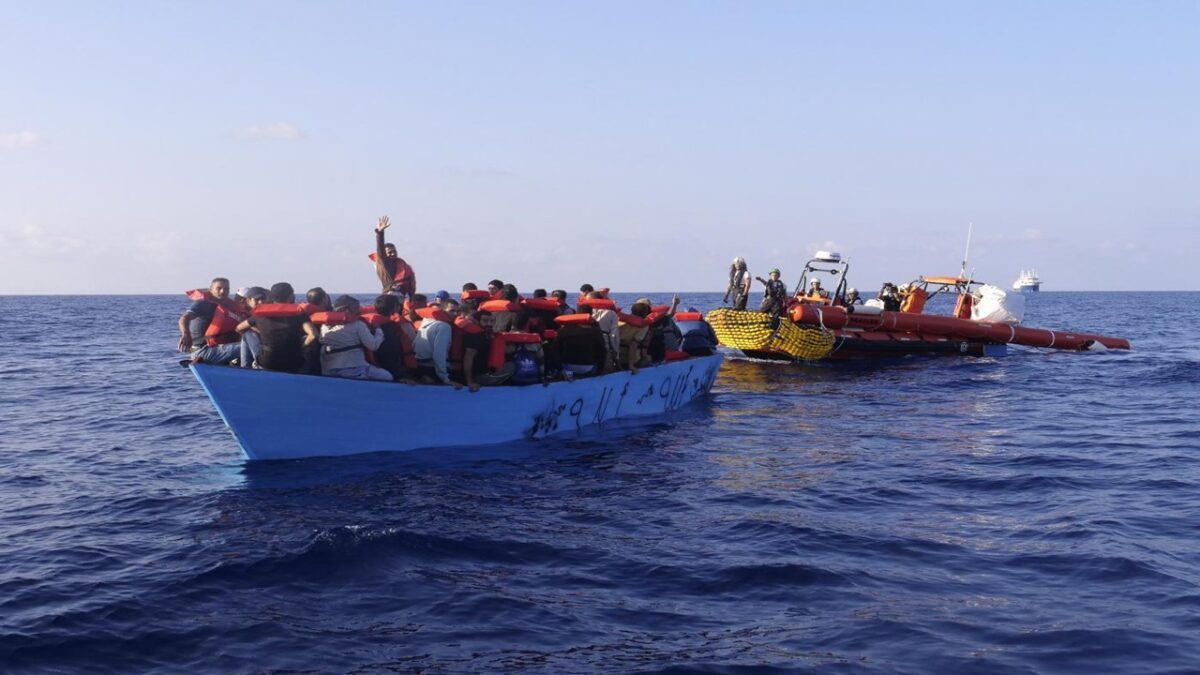

Frankfurt (Germany), 24 Aug. (LaPresse) – “A German Interior Minister cannot allow himself to be drawn into the political manoeuvring of an Italian government that is just a few months away from a general election and is seeking to gain support. He must firmly oppose the exploitation of sea rescue operations.” This was stated to LaPresse by Sea-Watch spokesperson Giulia Messmer, following the 45-day detention and fine imposed by the Italian authorities on the German NGO’s vessel, the Sea-Watch 5, amidst the ongoing dispute between Italy and Germany over so-called ‘Dublin cases’. “Our demand is: save lives, don’t talk. The right to rescue at sea is independent of passport, skin colour or financial means. The right to asylum has its roots in German history,” said the spokesperson, ahead of a possible meeting between Italian Interior Minister Matteo Piantedosi and his German counterpart Alexander Dobrindt. “Just four months ago, the German Interior Ministry raised the security alert level for the central Mediterranean due to attacks on people fleeing and rescue vessels by the so-called Libyan Coast Guard. The same minister cannot now, just a few weeks later, endorse the unlawful detention of our rescue vessel and turn a rescue from a danger zone into a bargaining chip in negotiations,” added Messmer, “on the contrary, Alexander Dobrindt must make it clear for the Mediterranean, just as he has for Germany’s borders: international law applies to everyone; the right to asylum is non-negotiable.” Sea-Watch has therefore directed its demands at the Italian government and the European Union: “We call for an immediate end to the obstacles to civilian rescue at sea; a publicly funded European civilian search and rescue programme; a fair distribution of refugees within the EU, taking into account the wishes and needs of those arriving at reception centres; and, in the long term, safe escape routes. Humanitarian visas, resettlement programmes, family reunification and flight tickets are measures that would genuinely reduce the number of deaths in the Mediterranean. Outsourcing responsibility to extraterritorial detention centres, on the other hand, merely shifts the violence and rights violations out of the European spotlight.”