
Washington (USA), 24 Sept. (LaPresse) – “The United Nations was founded to prevent violence from becoming the only law. But to remain true to that mission, it must regain its ability to decide and, above all, to act.” Antonio Tajani made these remarks in his address to the UN General Assembly, emphasising that “all too often, this Organisation appears powerless. For too long, its reform has been blocked by conflicting interests.” For Tajani, “the United Nations cannot merely record the divisions of the present. It must have the ambition to imagine the future. It must recognise its own limitations, overcome its own paralysis and reform its instruments, without renouncing its deepest raison d’être: to be the place where conflict gives way to dialogue, confrontation to diplomacy, and fear to the search for shared solutions”. And yet, “the United Nations remains the most universal forum for this aspiration. Not because it is perfect, but because no other institution can bring together such diverse interests, cultures, religions and perspectives around the same table. And it is precisely when the world is divided that the value of dialogue grows, not diminishes”.
UN, Tajani: “The United Nations must regain its ability to decide and act”
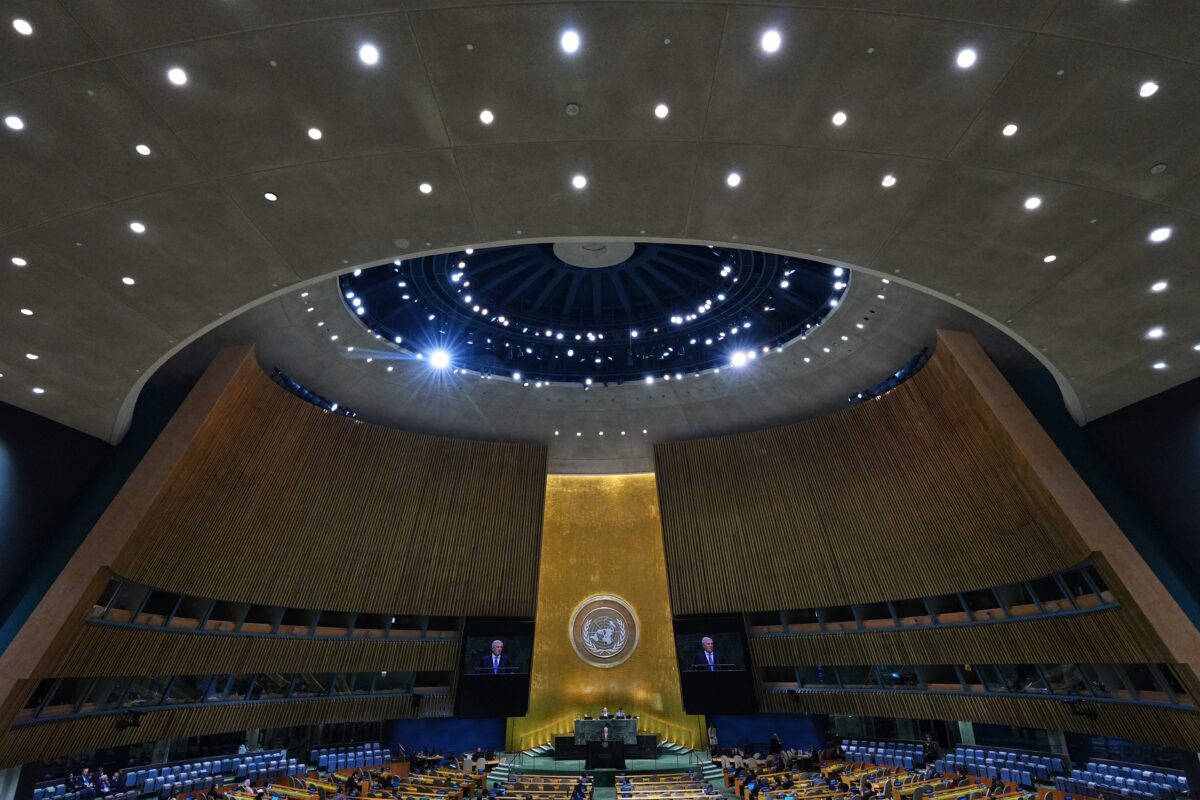

Washington (USA), 24 Sept. (LaPresse) – “The United Nations was founded to prevent violence from becoming the only law. But to remain true to that mission, it must regain its ability to decide and, above all, to act.” Antonio Tajani made these remarks in his address to the UN General Assembly, emphasising that “all too often, this Organisation appears powerless. For too long, its reform has been blocked by conflicting interests.” For Tajani, “the United Nations cannot merely record the divisions of the present. It must have the ambition to imagine the future. It must recognise its own limitations, overcome its own paralysis and reform its instruments, without renouncing its deepest raison d’être: to be the place where conflict gives way to dialogue, confrontation to diplomacy, and fear to the search for shared solutions”. And yet, “the United Nations remains the most universal forum for this aspiration. Not because it is perfect, but because no other institution can bring together such diverse interests, cultures, religions and perspectives around the same table. And it is precisely when the world is divided that the value of dialogue grows, not diminishes”.