
Frankfurt (Germany), June 29 (LaPresse) – “If we had kept interest rates unchanged, inflation would have remained above 2% in 2027 and 2028,” said ECB President Christine Lagarde during the ECB Forum in Sintra. “The rate increase decided at the beginning of June was not a precautionary hike. We acted because the outlook indicated a rise in both headline and core inflation, and projections showed a return to 2% only in the last quarter of 2027, and even then subject to an appropriate adjustment of monetary policy,” she explained. “It was a decision based on what we had in front of us. The ability to decide with confidence, despite a context of high uncertainty, is the result of years of investment in our data, indicators and projections,” she added. “Europe has built greater resilience to shocks, and this has reduced the need to resort to unconventional monetary policy measures. The ECB’s tools have reduced fragmentation risks, while the strengthening of the European institutional architecture, from the European Stability Mechanism to Next Generation EU and common debt instruments, has helped strengthen the resilience of the euro area,” Lagarde continued. “We no longer need to resort to unconventional tools, even though they remain available to us. We can now focus on stabilising inflation by using our policy rates as the main instrument. It is no longer necessary to act with the same intensity. We can make measured adjustments to rates, calibrated to the shocks we face,” she concluded.
ECB, Lagarde: “Without interest rate hikes inflation would remain above 2% even in 2028”
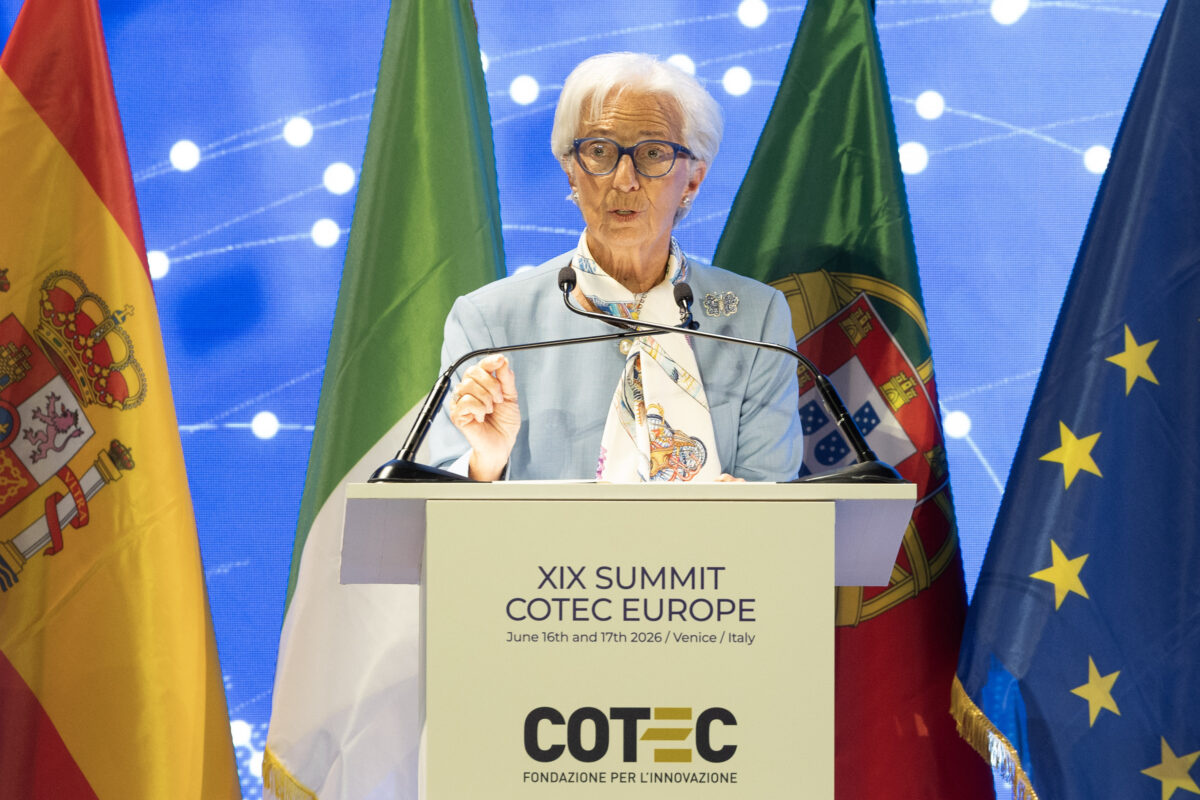

Frankfurt (Germany), June 29 (LaPresse) – “If we had kept interest rates unchanged, inflation would have remained above 2% in 2027 and 2028,” said ECB President Christine Lagarde during the ECB Forum in Sintra. “The rate increase decided at the beginning of June was not a precautionary hike. We acted because the outlook indicated a rise in both headline and core inflation, and projections showed a return to 2% only in the last quarter of 2027, and even then subject to an appropriate adjustment of monetary policy,” she explained. “It was a decision based on what we had in front of us. The ability to decide with confidence, despite a context of high uncertainty, is the result of years of investment in our data, indicators and projections,” she added. “Europe has built greater resilience to shocks, and this has reduced the need to resort to unconventional monetary policy measures. The ECB’s tools have reduced fragmentation risks, while the strengthening of the European institutional architecture, from the European Stability Mechanism to Next Generation EU and common debt instruments, has helped strengthen the resilience of the euro area,” Lagarde continued. “We no longer need to resort to unconventional tools, even though they remain available to us. We can now focus on stabilising inflation by using our policy rates as the main instrument. It is no longer necessary to act with the same intensity. We can make measured adjustments to rates, calibrated to the shocks we face,” she concluded.