
Zawtar al-Gharbieh (Lebanon), 29 July (LaPresse/AP) – A week after the Lebanese army re-established control over certain areas in the south of the country – designated as ‘pilot zones’ in the agreement with Israel – only around 15 families have returned to Zawtar al-Gharbieh, according to the mayor, Abed Ezzeldine. Almost half of the village’s 500 homes have been destroyed and many others damaged. Ezzeldine said that Zawtar al-Gharbieh is “devastated by the disaster”. “You can see a few houses still standing, but they are uninhabitable and cannot be repaired,” he added. The local council is doing its best to supply water via tankers to returning residents, and it is hoped that around 100 families will have returned to the village by the end of the week. Lebanese Army bulldozers are clearing rubble from the village’s streets. In the main square, lorries fitted with machine guns are parked near a partially destroyed mosque with a blue dome. About 100 metres away, an armoured personnel carrier blocks a road leading to the neighbouring village of Zawtar al-Sharqiyah, which is completely occupied by Israeli troops. Ezzeldine pointed out that, so far, he would not describe the pilot zone as a success. Israeli troops are still stationed nearby and drones are constantly flying over the village. Only the presence of the Lebanese army reassures the residents.
Lebanon: only 15 families have returned to the ‘pilot zone’ in Zawtar al-Gharbieh
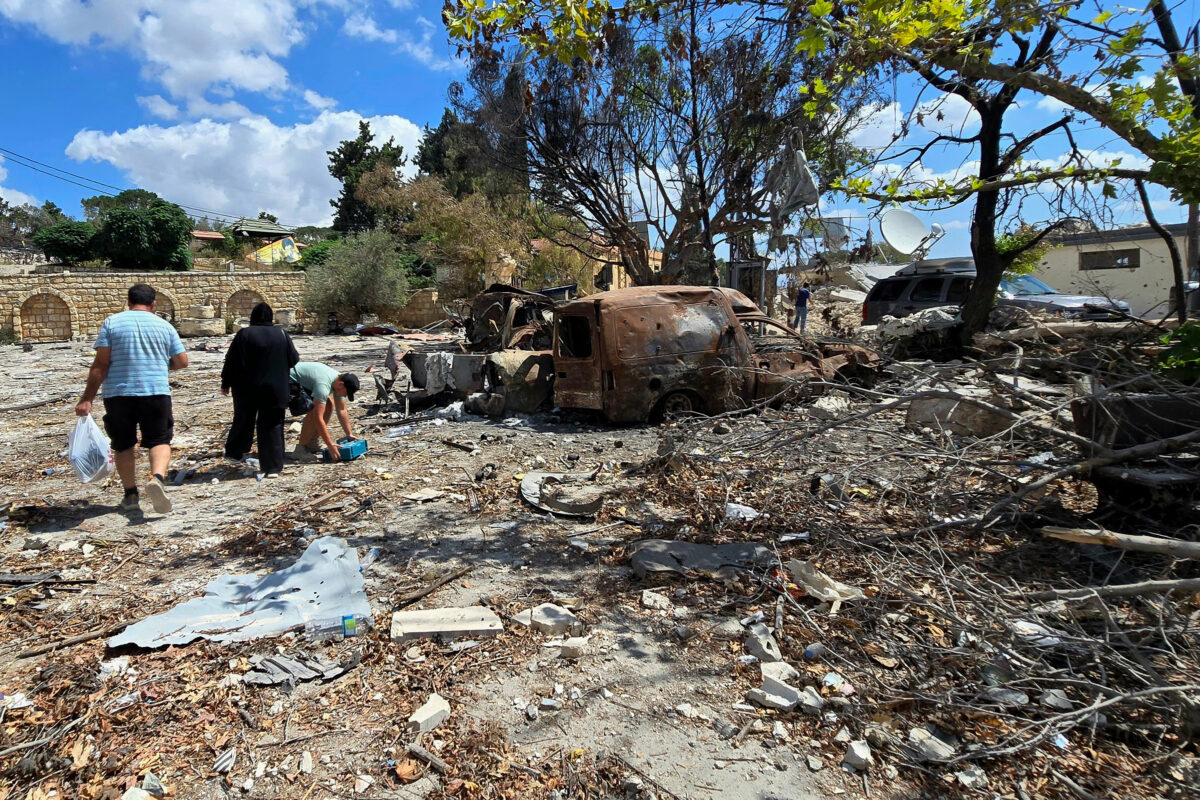

Zawtar al-Gharbieh (Lebanon), 29 July (LaPresse/AP) – A week after the Lebanese army re-established control over certain areas in the south of the country – designated as ‘pilot zones’ in the agreement with Israel – only around 15 families have returned to Zawtar al-Gharbieh, according to the mayor, Abed Ezzeldine. Almost half of the village’s 500 homes have been destroyed and many others damaged. Ezzeldine said that Zawtar al-Gharbieh is “devastated by the disaster”. “You can see a few houses still standing, but they are uninhabitable and cannot be repaired,” he added. The local council is doing its best to supply water via tankers to returning residents, and it is hoped that around 100 families will have returned to the village by the end of the week. Lebanese Army bulldozers are clearing rubble from the village’s streets. In the main square, lorries fitted with machine guns are parked near a partially destroyed mosque with a blue dome. About 100 metres away, an armoured personnel carrier blocks a road leading to the neighbouring village of Zawtar al-Sharqiyah, which is completely occupied by Israeli troops. Ezzeldine pointed out that, so far, he would not describe the pilot zone as a success. Israeli troops are still stationed nearby and drones are constantly flying over the village. Only the presence of the Lebanese army reassures the residents.