
Milan, 10 Sept. (LaPresse) – The Court of Turin has ordered Glovo to hire a delivery rider, to do so under a ‘full-time, permanent employment contract’ and to ‘pay adequately’ not only for the time taken to deliver food orders, as has been the case to date, but also for ‘waiting time’ outside restaurants and shops. In his ruling, the judge of the Labour Division, Nicola Tritta, declared a 2025 dismissal on disciplinary grounds—based on a charge determined by the food delivery platform’s algorithm—to be unlawful and unfounded, and recognised the foreign delivery rider’s right to be classified, with effect from 1 October 2024, as an employee of the multinational company under the sixth level of the National Collective Labour Agreement for the Tertiary, Distribution and Services. The Court ordered the payment of all ‘outstanding pay differences’ for the previous two years, as well as legal costs, reinstatement compensation and unpaid social security contributions for the past. The court accepted the arguments put forward by lawyer Giulia Druetta, who, together with the USB trade union, represented the delivery rider in a case that could also have implications for the investigation being conducted by the Milan Public Prosecutor’s Office, in conjunction with the Carabinieri’ Labour Inspectorate Unit specialising in illegal labour recruitment, into the multinational Glovo -Foodinho, and which has led to the company being placed under the control of a judicial administrator on the grounds that it paid wages contrary to Article 36 of the Constitution, as they failed to guarantee a “free and dignified” existence and were, in any case, below the poverty line.
Illegal labour practices: judge orders Glovo to hire a rider and pay for waiting time as well
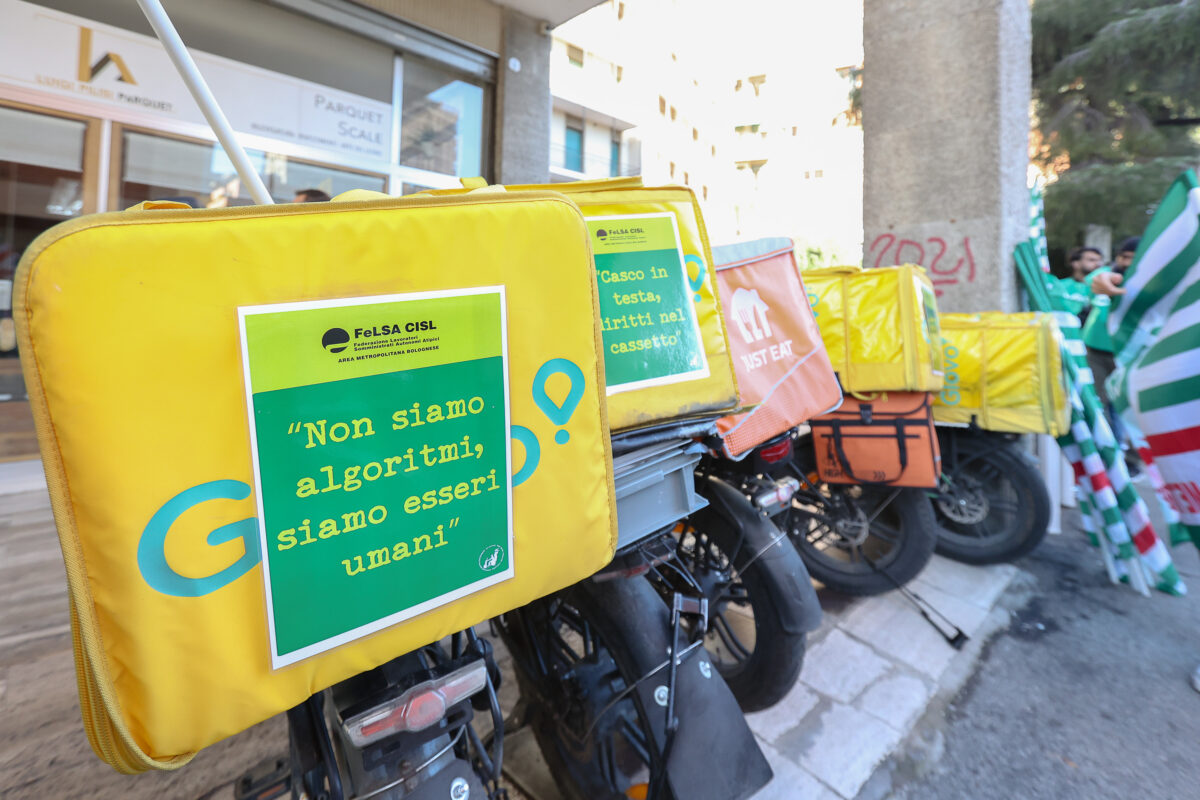

Milan, 10 Sept. (LaPresse) – The Court of Turin has ordered Glovo to hire a delivery rider, to do so under a ‘full-time, permanent employment contract’ and to ‘pay adequately’ not only for the time taken to deliver food orders, as has been the case to date, but also for ‘waiting time’ outside restaurants and shops. In his ruling, the judge of the Labour Division, Nicola Tritta, declared a 2025 dismissal on disciplinary grounds—based on a charge determined by the food delivery platform’s algorithm—to be unlawful and unfounded, and recognised the foreign delivery rider’s right to be classified, with effect from 1 October 2024, as an employee of the multinational company under the sixth level of the National Collective Labour Agreement for the Tertiary, Distribution and Services. The Court ordered the payment of all ‘outstanding pay differences’ for the previous two years, as well as legal costs, reinstatement compensation and unpaid social security contributions for the past. The court accepted the arguments put forward by lawyer Giulia Druetta, who, together with the USB trade union, represented the delivery rider in a case that could also have implications for the investigation being conducted by the Milan Public Prosecutor’s Office, in conjunction with the Carabinieri’ Labour Inspectorate Unit specialising in illegal labour recruitment, into the multinational Glovo -Foodinho, and which has led to the company being placed under the control of a judicial administrator on the grounds that it paid wages contrary to Article 36 of the Constitution, as they failed to guarantee a “free and dignified” existence and were, in any case, below the poverty line.