
Turin, 13 July (LaPresse) – “Here in Europe, we believe that it is parents who raise our children, not predatory algorithms. Social media is not a toy. Ultimately, it is up to parents to decide when children will get their first smartphone. However, we have already reached a consensus that there must be a set minimum age for children’s access to social media.” This was stated by the President of the European Commission, Ursula von der Leyen, at a press briefing in Brussels, upon receiving the report on children’s online safety. “Across Europe, young people now spend between 4 and 6 hours a day in front of screens. Six hours every day: that amounts to 20 years of their lives. At the same time, across Europe, nearly 60 per cent of children and younger teenagers have experienced emotional and psychosocial problems online,” she explained. “We cannot expect children to thrive in a system that was never designed with their wellbeing in mind, precisely when they are at their most vulnerable. The platforms have been the architects of these systems. Now they must prove that their services do not cause harm. In Europe, whoever develops a product is responsible for its safety,” she added.
EU, von der Leyen: “A minimum age is needed for access to social media”
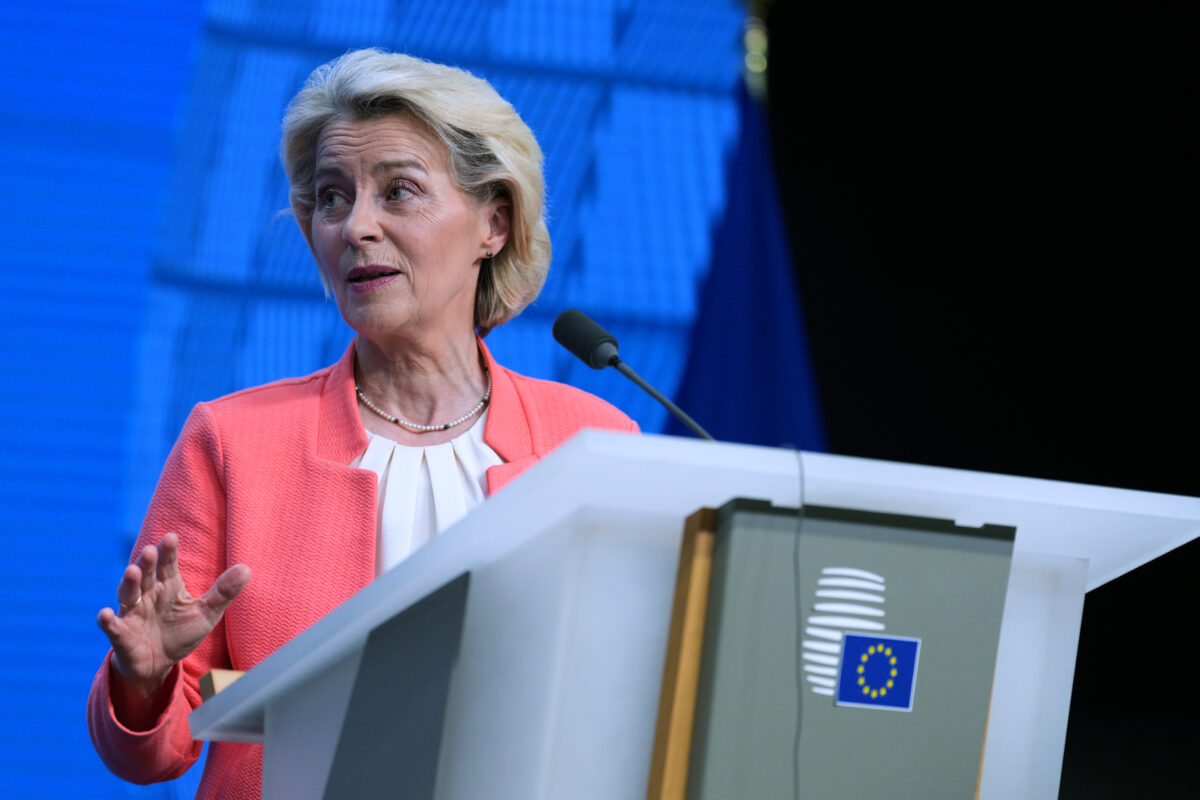

Turin, 13 July (LaPresse) – “Here in Europe, we believe that it is parents who raise our children, not predatory algorithms. Social media is not a toy. Ultimately, it is up to parents to decide when children will get their first smartphone. However, we have already reached a consensus that there must be a set minimum age for children’s access to social media.” This was stated by the President of the European Commission, Ursula von der Leyen, at a press briefing in Brussels, upon receiving the report on children’s online safety. “Across Europe, young people now spend between 4 and 6 hours a day in front of screens. Six hours every day: that amounts to 20 years of their lives. At the same time, across Europe, nearly 60 per cent of children and younger teenagers have experienced emotional and psychosocial problems online,” she explained. “We cannot expect children to thrive in a system that was never designed with their wellbeing in mind, precisely when they are at their most vulnerable. The platforms have been the architects of these systems. Now they must prove that their services do not cause harm. In Europe, whoever develops a product is responsible for its safety,” she added.